Breeze Medical
Breeze Medical
Breeze Medical
Engineered to meet the rigorous validation and calibration requirements of modern industrial sensing environments.
In the fields of biotechnology, clinical diagnostics, aquaculture, and large-scale industrial fermentation, Dissolved Oxygen (DO) stands as one of the most critical variables defining product yield and quality. Accurate measurement of oxygen concentration in fluid mediums requires not only sensitive electrochemical or optical sensing technologies but also highly pure, sterile laboratory environments and consumables. Contamination in a single bioreactor vessel or culture flask can invalidate millions of dollars of active pharma ingredients (APIs).
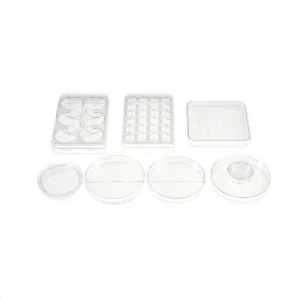
Ningbo Breeze Medical Co., Ltd., established in 2011, has risen to the forefront of the medical device and laboratory instruments industry. By integrating advanced processing capabilities, GMP-compliant cleanrooms, and state-of-the-art injection molding facilities, the company supports global diagnostic systems and sensing platforms. Reliable DO sensor housings, optical probe interfaces, and matching cell culture configurations must operate in perfect synergy to prevent leakage, maintain sterility, and yield actionable data.
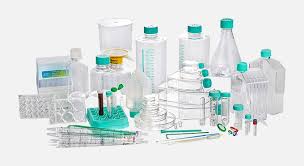
How digitalization and strict pharmaceutical regulations are shaping the next generation of sensing technologies.
The global market is witnessing a rapid shift from traditional galvanic or polarographic membrane sensors to optical (luminescence-based) DO sensors. Optical sensors do not consume oxygen during measurement, do not require flow dependency, and exhibit exceptional long-term stability with minimal calibration drift, saving operational overhead in automated systems.
Biomedical research and clinical production lines are adopting single-use bioreactor (SUB) systems. Consequently, manufacturers require pre-sterilized, integrated dissolved oxygen sensors that can be pre-installed into cell culture flasks or plates. This integration eliminates autoclave cycles, speeds up batch validation, and reduces the risk of cross-contamination.
Modern smart factories, wastewater plants, and inland aquaculture projects require DO sensors equipped with Modbus, RS485, or wireless protocols. Real-time data visualization allows AI-driven aeration controllers to dynamically adjust oxygen flow, maximizing energetic efficiency and maintaining biological equilibrium.
"The integration of high-accuracy sensing nodes within certified sterile vessels is the cornerstone of automated bioprocess scaling. Ningbo Breeze Medical's ISO 13485 cleanrooms ensure that the structural consumables interface seamlessly with these sophisticated measuring instruments."
Harnessing advanced automation, strict ISO standards, and high-volume consistency to serve demanding international markets.
Ningbo Breeze Medical Co., Ltd. has established an optimized infrastructure system designed to satisfy the world's most demanding buyers. Serving as a reliable supply chain partner, the company's facility boasts an advanced automatic injection molding workshop and an integrated support production line. Operating under strict Good Manufacturing Practice (GMP) regulations, all process outputs are subject to validation by the specialized Product Quality Testing Center. These robust testing processes ensure that materials maintain high chemical resistance, excellent light-transmission rates (essential for optical DO sensor alignment), and leak-proof containment properties.
This automated production capacity allows Ningbo Breeze Medical to achieve economies of scale without compromising quality parameters. By employing raw materials that meet CE, ISO 9001:2008, ISO 13485:2003, and international Free Sales Certificate requirements, the company provides global DO sensor system developers with customized polymer ports, optical-grade windows, and support machinery (such as automated gel filling machines, ultrasonic cleaning units, and labeling systems) that form the baseline of precise sensor application environments.
Addressing specific challenges across biopharmaceutical, environmental, and aquaculture sectors.
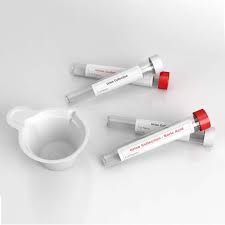
Different industrial landscapes present distinct operating conditions for dissolved oxygen sensors. A one-size-fits-all approach inevitably leads to early membrane fatigue, sensor drift, or biological contamination. We analyze four key localized deployment settings:
Expert answers regarding calibration, maintenance, sensor types, and material compatibility.
Ensuring reliable diagnostic workflows and precise sample containment across testing laboratories.