Breeze Medical
Breeze Medical
Breeze Medical
Engineered to satisfy rigorous scientific standards and optimize diagnostic, clinical, and culture assays.
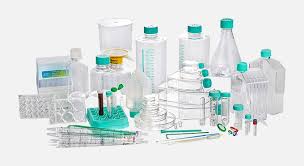
Founded in 2011, Ningbo Breeze Medical Co., Ltd. has established itself as an authoritative leader in the medical device industry, specializing in the precision manufacturing of disposable medical consumables and advanced laboratory instruments. Our commitment to supplying high-integrity diagnostic and laboratory equipment is backed by multi-million-dollar infrastructure investments.
Operating within state-of-the-art facilities, we maintain a highly controlled GMP-compliant cleanroom environment, an automatic injection molding workshop, and automated support production lines. This foundation allows us to engineer and scale OEM laboratory beakers with exceptional dimensional stability, chemical resistance, and graduation precision.
Our dedicated Product Quality Testing Center utilizes advanced physical, chemical, and biological assays to ensure that every production run complies with international standards, delivering reliable, contaminant-free labware for clinical diagnostics, research, and industrial chemistry.
A comprehensive review of polymer and glass compounds engineered for chemical inertness, thermal limits, and mechanical durability.
The standard for rugged, everyday clinical and industrial labware. Highly resistant to acids, bases, and organic solvents. Autoclavable at 121°C. Offers high impact resistance and cost-effectiveness for bulk institutional distribution.
Exceptional transparency resembling glass, coupled with high chemical resistance. Capable of withstanding continuous exposure up to 150°C (intermittent to 175°C). Ideal for high-temperature chemical reactions where visual control is critical.
Designed for trace metal analysis and highly aggressive chemical processing. Chemically inert across virtually all media, including hydrofluoric acid. Operating temperature ranges from cryogenic limits up to 260°C.
| Material Class | Autoclavability | Transparency | Max Service Temp | Chemical Resistance (Acids / Bases / Organics) | Typical OEM Application |
|---|---|---|---|---|---|
| Polypropylene (PP) | Yes (121°C) | Translucent | 135°C | Excellent / Excellent / Good | General-purpose laboratory mixing & reagent preparation |
| Polymethylpentene (PMP) | Yes (121°C) | Clear (Glass-like) | 175°C | Excellent / Good / Fair | Volume measurement requiring high visibility and moderate heat |
| Borosilicate 3.3 Glass | Yes (121°C) | High Transparency | 500°C | Outstanding / Moderate / Outstanding | Direct heating, synthesis, and thermal-shock demanding setups |
| Polytetrafluoroethylene (PTFE) | Yes (121°C) | Opaque White | 260°C | Outstanding / Outstanding / Outstanding | Ultra-pure trace metal analysis, corrosive chemical containment |
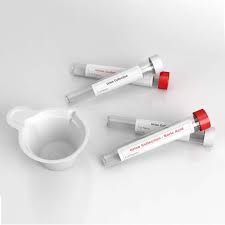
Ningbo Breeze Medical utilizes precision manufacturing infrastructure designed to handle large-scale global demand. By integrating high-cavity hot-runner molds with robotic extraction arms, our automatic injection molding workshop eliminates human handling, preventing particulate and biological contamination right at the molding stage.
We operate automated production lines for vacuum blood collection tubes, labeling machines, drying ovens, gel filling machines, and ultrasonic cleaning systems. This level of automation ensures that all supporting laboratory plasticware and glassware are manufactured under consistent physical conditions (temperature, pressure, speed), reducing dimensional variances to less than ±0.1%.
Our raw material supply chain relies on long-term partnerships with certified global polymer synthesis companies. This procurement framework buffers our clients against global raw material price swings, guaranteeing cost-efficiency, stable batch properties, and uninterrupted shipping schedules.
Innovating next-generation beaker engineering to meet the digital and ecological demands of tomorrow's scientific environments.
Developing high-purity, bio-sourced PLA and recyclable polymers that match the chemical and thermal resistance of fossil-based PP, minimizing the environmental footprint of single-use laboratory plastics.
Embedding low-profile RFID tracking chips and high-accuracy laser-etched matrix codes on OEM labware, enabling seamless laboratory management database entry and automated sample tracking.
Developing fluorinated and ultra-hydrophobic inner surface treatments to minimize liquid retention and prevent expensive chemical losses in micro-diagnostic procedures.
Custom OEM beakers and laboratory consumables configured for distinct scientific and industrial ecosystems.
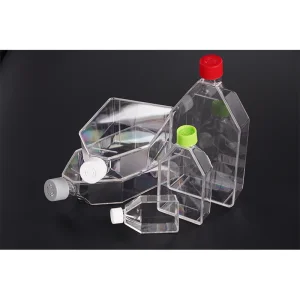
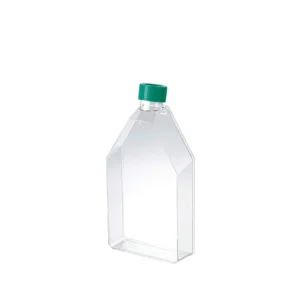
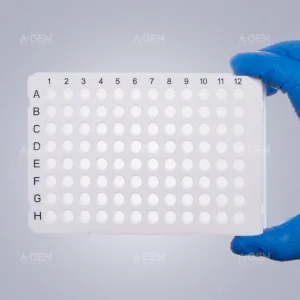
In clinical labs, safety and sterility are non-negotiable. Our OEM beakers, PCR plates, and cell culture flasks undergo rigorous testing to ensure zero DNA/RNAse contamination. They are engineered to interface cleanly with automated liquid handlers, minimizing reagent waste and ensuring consistent measurements in high-throughput environments.
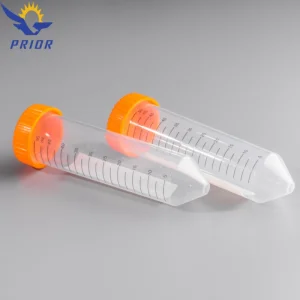
Industrial settings subject labware to aggressive organic solvents, high temperatures, and mechanical stress. Our polymer beakers and centrifuge tubes feature thick, even walls to prevent cracking under high load or thermal shock. Clear, permanent molded graduations ensure reliable volumetric measurement.
Streamlined contract manufacturing services for international distributors and scientific brand networks.
Our engineering team designs custom molds using CAD and mold-flow analysis tools. We can produce custom volume sizes, modify wall thicknesses, add handle attachments, or create multi-spout designs to match your specific application requirements.
Increase your market presence with customized printing. We support screen printing, hot stamping, laser engraving, and custom-molded logos directly onto the beaker walls, ensuring clear legibility and chemical resistance.
Located near Ningbo Port, we leverage fast sea, air, and rail transport links. Our logistics department prepares custom export documentation, performs drop-testing on packaging, and ensures goods arrive safely and on time.
Ensuring global safety compliance and reliable labware performance through strict international quality standards.
At Ningbo Breeze Medical Co., Ltd., quality is integrated into every step of our manufacturing workflow. Our quality control system is certified under international standards, including ISO 9001:2008 and ISO 13485:2003. We maintain active CE registrations and supply Free Sales Certificates, allowing smooth customs clearance and regulatory approval across the Americas, Europe, and Asia.
Our in-house Product Quality Testing Center monitors raw material lots, checks dimensional tolerances, and verifies chemical purity. We test all plastic and glass labware for pyrogen, endotoxin, and cytotoxicity to ensure they meet the demands of advanced scientific research.
Our lab provides dedicated batch test certificates, chemical compatibility charts, and material data sheets (SDS) on request.
Request Quality DocumentationAnswering common questions about custom OEM beakers, manufacturing tolerances, shipping terms, and material options.
Providing high-precision plastic and glass labware for hospitals, research labs, and industrial chemistry.