Breeze Medical
Understanding the evaporation of PCR samples during cycles is crucial for optimal results. The polymerase chain reaction (PCR) is sensitive to the conditions within the reaction tubes. According to recent industry reports, sample evaporation can lead to inconsistent concentrations and decreased yield. This is particularly relevant in high-throughput settings.
Research indicates that factors like temperature fluctuations and the type of consumables can significantly contribute to sample evaporation. A study from the Journal of Molecular Biology notes that evaporation rates can rise by up to 30% in standard PCR conditions. This impacts the reliability of data, leading scientists to question, "Why do PCR samples evaporate during cycles?"
Regular monitoring and the use of advanced sealing techniques may mitigate these issues. However, not all labs utilize the best practices, leading to variability in results. This inconsistency can hinder progress and diminish the reliability of scientific outcomes. Understanding the evaporation mechanisms can empower researchers to adopt better strategies, ultimately enhancing the effectiveness of their PCR experiments.
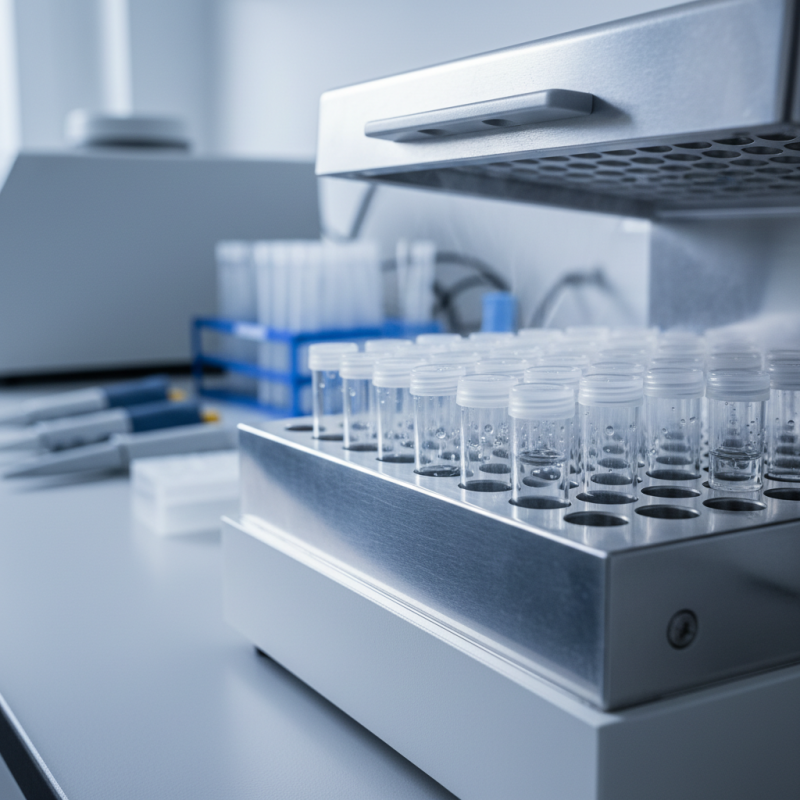
Polymerase Chain Reaction (PCR) is a crucial technique in molecular biology. It allows researchers to amplify small segments of DNA. This amplification is essential for various applications, including genetic testing and research. PCR involves cyclic temperature changes to denature DNA, anneal primers, and extend new strands. Each cycle doubles the amount of DNA, making it a powerful tool.
However, during these cycles, sample evaporation can occur, impacting results. Inadequate sealing of PCR tubes can lead to moisture loss. This loss can alter concentration and affect amplification efficiency. Using wax or oil overlay can help minimize evaporation. Yet, researchers often overlook this step, leading to inconsistent results.
Attention to detail is vital. Proper sealing and humidity control can enhance outcomes. Mistakes in these areas might seem minor but can lead to significant variations in data. Being vigilant about sample conditions will improve reliability and reproducibility. Ultimately, understanding the nuances of PCR is essential for successful experiments.
Temperature plays a crucial role in the PCR process. Each cycle involves multiple temperature changes, impacting sample integrity. High temperatures denature DNA, while lower temperatures help anneal primers. However, the temperature fluctuation may cause evaporation of the sample. According to recent studies, up to 15% of samples can evaporate during PCR cycles, especially in environments with high airflow or inadequate seals.
During PCR, the typical denaturation occurs at around 95°C. This high temperature is essential for breaking hydrogen bonds between DNA strands. However, the subsequent cooling phases can lead to condensation formation inside the tubes. This condensation can land back into the reaction mix, but if the balance is not right, evaporation may dominate. Laboratory data shows that even a well-designed PCR system can lose valuable reagents if proper temperature management is neglected.
The thermal cycling process emphasizes the need for careful thermal control. Evaporation impacts the concentration of reagents, thus affecting amplification efficiency. A good practice involves using adhesive film or tight-seal caps. These measures reduce air exposure, helping maintain sample volume. Even small losses can result in significant time and resource waste, prompting continuous evaluation and refinement of techniques in the lab.
Evaporation during PCR cycles is a common challenge that affects sample integrity. One leading factor is the temperature fluctuations in the thermal cycler. Studies show that when samples are exposed to elevated temperatures, evaporation rates increase significantly. For instance, experiments indicate that at 95°C, the evaporation rate can reach up to 20% in just a few minutes. This unintended loss of sample volume can lead to inconsistent results.
Another key contributor is the reaction volume used in PCR. Small volumes, particularly those below 20 microliters, are more prone to evaporation. It's reported that a standard PCR reaction of 10μl can lose up to 25% of its volume during a 30-cycle amplification. With such high stakes, researchers must consider the design of their experiments carefully. Using sealing materials, like physical or adhesive seals, can mitigate sample loss but may also introduce variability.
Moreover, the humidity level in the chamber plays a crucial role. Low humidity can accelerate evaporation even further. It's essential to monitor environmental conditions during PCR processes. In a controlled study, it was found that maintaining humidity above 50% reduced evaporation losses by nearly half. Balancing these factors can be complex but necessary for reproducible results. Understanding these variables is vital for improving PCR outcomes and ensuring sample reliability.
Evaporation during PCR cycles can significantly affect results. As samples are heated, some liquid can evaporate from reaction tubes. This loss concentrates the remaining components, leading to unintended amplification biases. A study noted that even a 2% loss of volume can alter reaction efficiency and yield.
The impact of evaporation is profound. A decline in sample volume can skew quantification, making results unreliable. One report highlighted that PCR inconsistencies affected by evaporation could lead to a 30% variability in quantitative outcomes. Inconsistent amplification may also introduce false negatives or positives.
Efficiency decreases as enzymes may become less effective without optimal conditions. Maintaining the right volume is crucial for accurate replication. However, labs often overlook this aspect. Identifying evaporative loss as a risk can drive improvements in sample handling and thermal cycling protocols. This awareness emphasizes the need for vigilance in experimental processes.
Evaporation during PCR cycles is a common issue that can impact the results. Samples often lose volume due to heat generated in the thermal cycler. This loss can lead to decreased sensitivity and variability in results. The challenge lies in maintaining sample integrity throughout the process.
Mitigating sample evaporation is crucial. One effective strategy is to use sealing films or caps. These create a barrier against evaporation while also allowing heat transfer. Another approach involves optimizing the thermal profile to reduce exposure times at high temperatures. It’s also essential to use buffer solutions that can withstand higher temperatures without compromising stability.
Though these methods can help, they may not eliminate evaporation entirely. Occasionally, you'll need to revisit protocols and refine conditions. This reflection ensures that the mitigation strategies continue to meet the evolving demands of your experiments. Staying updated with best practices helps maintain the integrity of your PCR samples.
This chart illustrates the percentage of sample evaporation observed during each PCR cycle. As the number of cycles increases, a rising trend in evaporation percentage is evident, highlighting the importance of implementing mitigation strategies to minimize sample loss.
: Evaporation can lead to significant concentration changes in samples, causing unintended amplification biases.
Even a 2% loss in volume can alter reaction efficiency and yield.
Evaporation can cause up to 30% variability in quantitative results, affecting reliability.
Inconsistent amplification may lead to false negatives or positives in results.
Proper volume ensures optimal enzyme effectiveness and accurate results through the replication process.
Using sealing films or caps and optimizing thermal profiles can help reduce evaporation.
No, methods may not fully eliminate evaporation, so ongoing refinement of protocols is necessary.
Regularly reviewing and updating protocols helps maintain sample integrity over time.
Buffers that withstand higher temperatures help maintain stability and reduce evaporation effects.
Labs should consider how well their strategies counteract evaporation and meet experimental needs.
The process of Polymerase Chain Reaction (PCR) relies heavily on temperature cycling to amplify DNA, but one crucial concern is "Why do PCR samples evaporate during cycles?" As temperature fluctuates, the heat can cause the liquid samples in the PCR tubes to evaporate, especially if proper seals are not in place. This evaporation can lead to a decrease in reagent concentrations, impacting the overall efficiency and accuracy of the PCR results.
Several factors contribute to sample evaporation, including tube design, the volume of the reaction, and the duration of each cycle. The consequences of evaporation can be significant, leading to reduced yield and potential contamination. To mitigate these issues, various strategies can be employed, such as using low evaporative lid designs, adjusting the reaction volumes, or incorporating oil overlays. These approaches help ensure reliable PCR outcomes by minimizing sample loss due to evaporation during the cycler process.
